Habit vs Addiction: How to Tell if Your Routine Is Healthy

Habit vs Addiction: Is Your Routine Helping You or Controlling You?
Evaluation of habit vs addiction – to determine if a habit is a good or bad addiction, analyze your level of control and the outcome of the behavior. A healthy habit supports your daily goals and well-being, while a bad addiction creates compulsion, triggers emotional distress when interrupted, and negatively impacts your health, relationships, or productivity.
The Fine Line Between High Performance and Compulsion
In a fast-paced world, line-blurring behaviors are everywhere. Working late every night can look like exceptional dedication, but it might be an avoidance tactic for personal issues. Going to the gym six days a week looks like peak fitness, but missing a single workout causing anxiety points to a deeper issue.
Understanding the shift from a structured healthy routine to a psychological dependency is essential for maintaining control over our lifestyle. When a habit transitions into a compulsion, it alters your baseline behavioral control and changes how your brain processes rewards.
1. What Is the Difference Between a Habit and an Addiction?
While both habits and addictions rely on repetitive behavior loops, their underlying psychological triggers and impacts differ significantly:
| Indicator | Healthy Habit | Behavioral Addiction / Bad Compulsion |
| Control | Easy to stop or modify without distress. | Feels mandatory; stopping causes anxiety or irritability. |
| Impact | Enhances productivity, health, and focus. | Negatively impacts work, relationships, or health over time. |
| Intent | Driven by long-term goals and values. | Driven by immediate relief or a quick dopamine loop. |
| Awareness | Performed with conscious, intentional focus. | Performed automatically as an emotional coping mechanism. |
2. Four Key Signs Your Routine Has Become a Bad Addiction
To perform a quick habit audit, look for these primary behavioral indicators to check if a routine is working for or against you:
- Loss of Behavioral Control: You set limits (e.g., “I’ll only scroll for 15 minutes” or “I’ll take two rest days”), but you routinely break them.
- Negative Consequences: The activity starts causing friction in your personal relationships, sleep quality, or professional obligations, yet you continue doing it.
- Withdrawal and Irritability: When circumstances prevent you from completing the habit, you feel overly restless, anxious, or moody.
- Tolerance Expansion: You need higher “doses” of the activity – e.g., more hours working, higher intensity workouts, or longer screen time – to achieve the same level of satisfaction.
3. Common “Positive” Habits That Can Turn Harmful
Certain habits carry a positive social reputation, making it harder to recognize when they cross into harmful territory:
- Exercise: Transitioning from staying fit to exercising through injuries or skipping essential social events to avoid missing a workout.
- Productivity & Hustle: Shifting from building a career to using continuous work to suppress emotional stress or personal conflicts.
- Clean Eating (Orthorexia): Moving from mindful nutrition to experiencing severe anxiety over eating food that wasn’t prepared under strict conditions.
4. How to Conduct a 3-Step Habit Audit
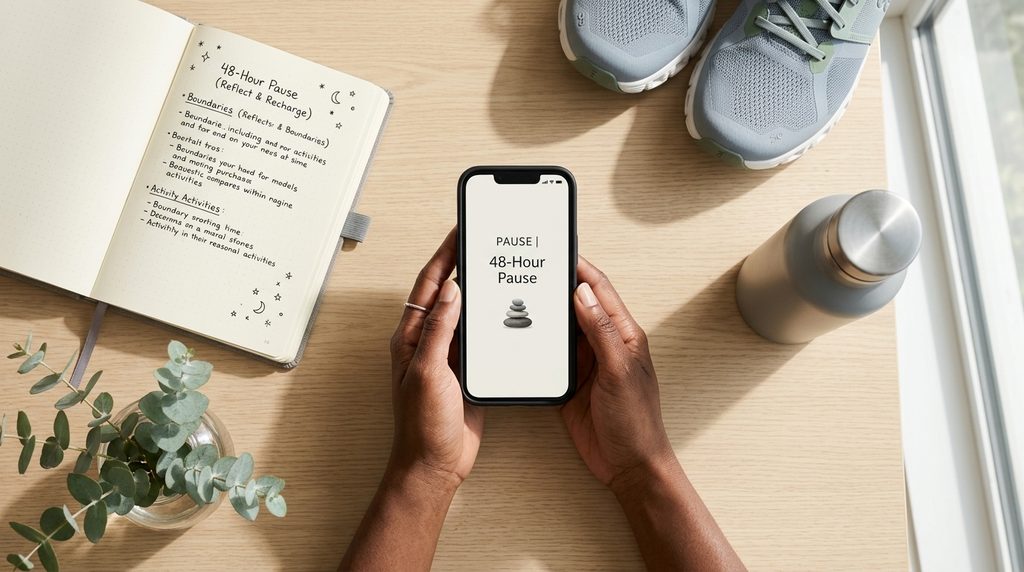
- Implement a 48-Hour Pause: Step away from the habit for two full days. Track your emotional response: do you feel neutral, or do you experience intense cravings and agitation?
- Evaluate the Motivation: Ask yourself: “Am I doing this to achieve a positive outcome, or to escape an uncomfortable emotion?”
- Set Hard Boundaries: Reintroduce the activity with strict boundaries (e.g., stopping work at 6:00 PM, limiting social media to 30 minutes). If you repeatedly violate your own boundary, the habit requires a structural reset.
Questions Frequently Asked
Can a good habit turn into a bad addiction?
Yes. A healthy routine turns harmful when it becomes an involuntary coping mechanism, causes psychological distress when interrupted, or leads to severe burnout.
What is the fastest way to break a bad behavioral loop?
The most effective method is habit replacement. Identify the underlying trigger and substitute the harmful behavior with an action that provides a similar psychological reward without the negative side effects.
Take Control of Your Lifestyle on whatswhat.ng
Looking to build healthier routines, trade quality wellness gear, or amplify your lifestyle projects across Nigeria?
Explore whatswhat.ng — Read local health insights, shop gadgets and fitness kits on the Free Market, and showcase your creative brand on Hype Link today!
Medical Disclaimer: This article is for general information and is not a substitute for personalized medical advice. If you have concerns or struggling with finding balance between healthy routines and psychological compulsions, seek a qualified healthcare professional.
Related:
Share

DELL LATITUDE 7440 Laptop
₦1,400,000 Negotiable

Mercedes Benz GLE 350 4matic 2020
₦72,000,000 Negotiable