
How to Pick a Ripe, Sweet Watermelon Every Single Time
Selecting the perfect watermelon at the market often feels like a guessing game. However, picking a melon that is bursting with juice, natural sweetness, and essential nutrients requires only a few key visual and auditory checks.
Because watermelons stop ripening the moment they are harvested, knowing what to look for on the outside guarantees maximum flavor on the inside. Follow these five proven steps to select a sweet, delicious watermelon every time.
5 Easy Steps to Pick a Sweet Watermelon
| Secret Test | What to Look For | What It Signals | What to Avoid |
| 1. Field Spot | Deep, creamy, or golden-yellow patch | Ripened fully on the vine | White, pale, or missing field spot |
| 2. Weight | Unusually heavy for its size | High water content (92% water) | Lightweight or hollow-feeling melon |
| 3. Rind Finish | Dull, dark green, matte surface | Mature, ready-to-eat fruit | Glossy, shiny, or pale green rind |
| 4. Sugar Webbing | Rough, brown, web-like scars | High sugar content from pollination | Completely smooth, mark-free skin |
| 5. Sound Test | Deep, hollow, echoing thump | Crisp, dense, and juicy flesh | Flat, high-pitched, or dull thud sound |
The 5 Rules for Selecting Ripe Watermelon
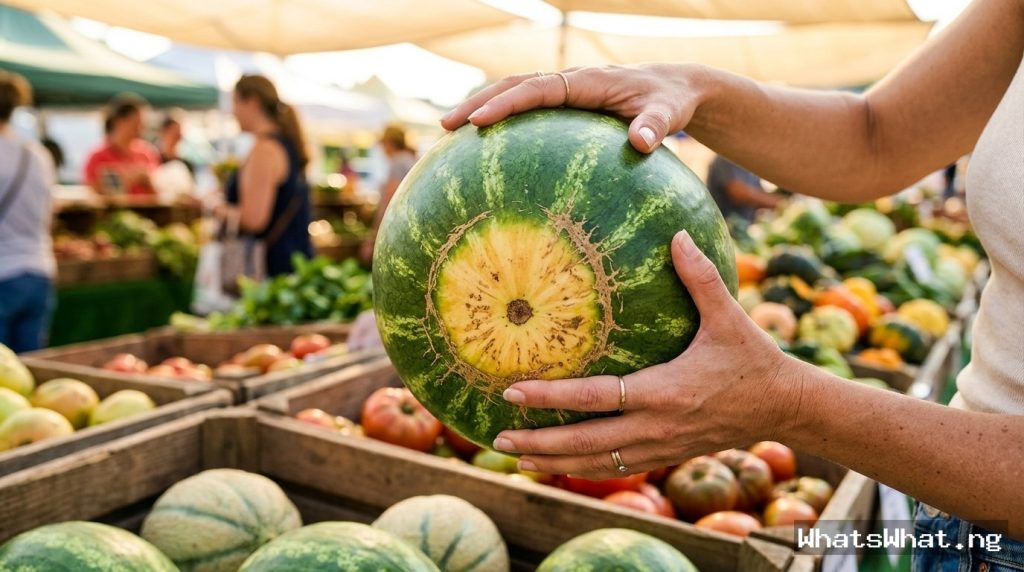
1. Find a Deep Yellow Field Spot
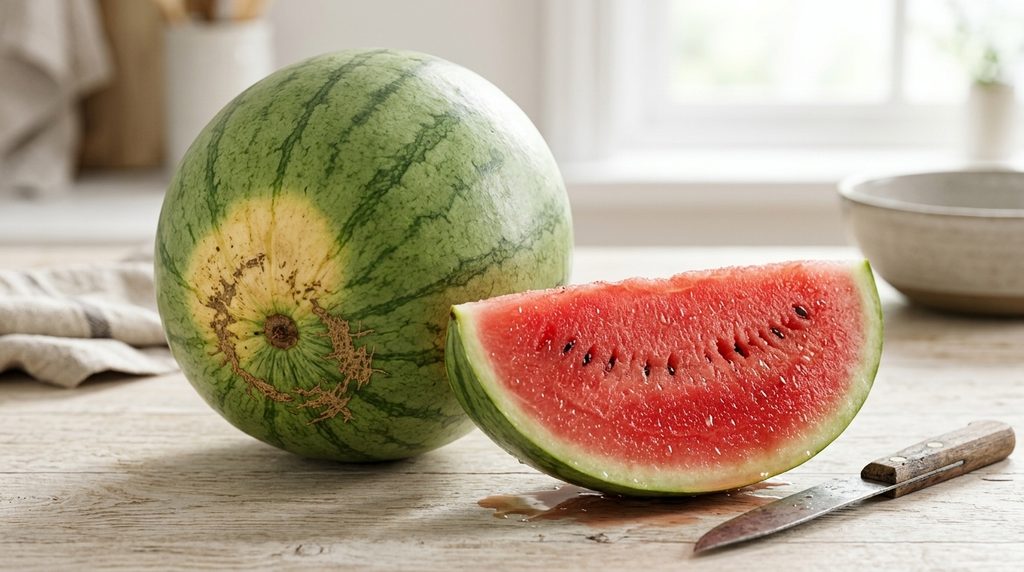
The field spot (or ground spot) is the patch where the watermelon rested on the soil while growing.
- The Sweet Sign: Look for a dark, creamy yellow or golden-orange patch. This indicates the melon spent ample time ripening naturally on the vine.
- The Red Flag: A white, pale yellow, or non-existent spot means the fruit was harvested too early, resulting in a bland, tough interior.
2. Choose the Heaviest Melon
Watermelons are approximately 90% to 92% water. When comparing two watermelons of similar size, always buy the heavier one. Extra weight means maximum liquid content, yielding dense, crisp, and juicy slices. Light watermelons are typically dry or under-developed.
3. Look for a Dull, Matte Finish
While a glossy, shiny watermelon might look attractive, a shiny rind signals an underripe fruit. Mature watermelons lose their sheen and develop a deep green, dull, matte surface. Always pick the less shiny option on the display.
4. Embrace Brown “Sugar Webbing”
Rough, brown, web-like lines on the skin are often referred to as “sugar spots.” These scars occur when bees pollinate the blossom, causing tiny sugar seepages as the fruit expands. While these markings make the melon look less uniform, heavy webbing directly correlates with high sugar concentration and superior flavor.
5. Perform the Hollow Sound Test
Give the middle of the watermelon a firm tap or thump:
- Ripe: Produces a deep, low-pitched, hollow sound that reverberates.
- Underripe/Overripe: Produces a high-pitched tap (underripe) or a flat, dull thud (overripe/mealy).
Health Benefits of Eating Fresh Watermelon
Picking a ripe watermelon isn’t just about taste, it also maximizes its nutritional profile:
- Hydration Boost: Packed with electrolyte-rich water, helping maintain optimal fluid balance.
- Rich in Lycopene: Fully ripe, red-fleshed watermelons contain high concentrations of lycopene, a powerful antioxidant that supports heart health and reduces oxidative stress.
- Essential Vitamins: Delivers high doses of Vitamin C for immune support and Vitamin A for eye and skin health.
The Ultimate 20-Minute Beginner Home Workout (No Equipment)
Frequently Asked Questions
How can you tell if a watermelon is sweet before cutting it?
To tell if a watermelon is sweet before cutting, look for a deep golden-yellow field spot, heavy brown sugar webbing, a dull matte skin finish, and a melon that feels heavy for its size.
What does a ripe watermelon sound like when you knock on it?
A ripe watermelon emits a deep, low-pitched, hollow sound when tapped. If it produces a high-pitched tap or a flat, dull thud, the melon is likely underripe or overripe.
Why is a yellow spot on a watermelon important?
The yellow spot (field spot) shows where the watermelon rested on the ground to ripen in the sun. A dark, creamy yellow field spot proves the fruit fully matured on the vine before being picked.